
Your Complete Guide to Breast Form Fitting
As Amoena Certified Mastectomy Fitters, our goal is to help you feel balanced, comfortable, and confident after surgery. This guide explains how breast forms work, how they’re fitted, and what the Amoena sizing codes really mean so you can understand your options and feel prepared before your fitting.
How to Wear a Breast Form
Most women wear breast forms daily and for all occasions.
To securely hold a breast form or partial shaper, Amoena designs beautiful bras with integral pockets. These pocketed bras boost your confidence and body image and help ensure the breast form doesn’t slip out or slide around. (A self-adhesive breast form like Amoena Contact is another option, but we do recommend wearing it with a bra.)
While you can wear non-pocketed “regular” bras, they may not be as secure for you as a bra with a pocket in the cup.
Because staying fit is so important, particularly after breast surgery, pocketed swimwear and pocketed activewear, including sports bras, are also available.
Leisure and home wear lets you relax in comfort because the bras are built right in. In all of these lingerie and clothing options, pockets securely hold the breast forms in place and let you move freely.
Wearing the right breast form can make a big difference in how you feel every day.
Breast Prosthesis Fitting Process
For the perfect fit, it’s important that you consult individually with a trained, certified mastectomy fitter in a specialist shop, like those of us at Naturally You. Your fitter’s experience and knowledge can help you identify your unique needs and guide you to the best options when choosing the right breast form.
We understand that with such a wide range to choose from, selecting a breast form can feel a bit overwhelming. To make it easier, Amoena codes their products with a simple number and letter system.
You or your fitter should begin with these three steps to get started:
Step 1: Cup Fullness
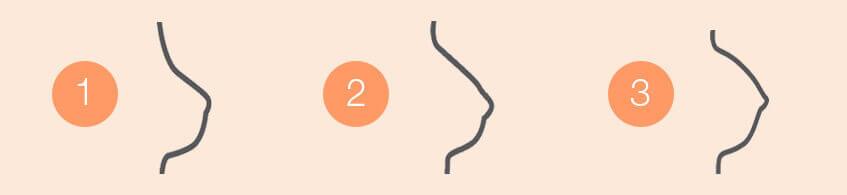
Select the cup fullness you need. Is your remaining breast (1) shallow, (2) average, or (3) full?
Step 2: Shape
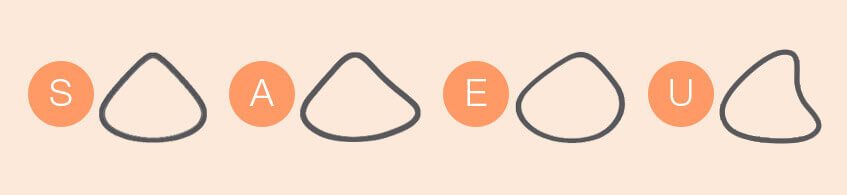
Consider the shape: (S) symmetrical, (A) asymmetrical or (E) extra.
Generally, a symmetrical shape is best after a standard mastectomy, and an asymmetrical breast form is often recommended if you have had lymph nodes or tissue removed from under your arm.
Step 3: Size
Your fitter will properly measure your bra size to determine your breast form size. All Amoena breast forms are available in a wide size range.
We recommend that you wait at least six weeks after your breast surgery to ensure that incisions have healed.
It is also important to make an appointment yearly, because bodies change over time and as we age.
Breast Form Conversion Chart
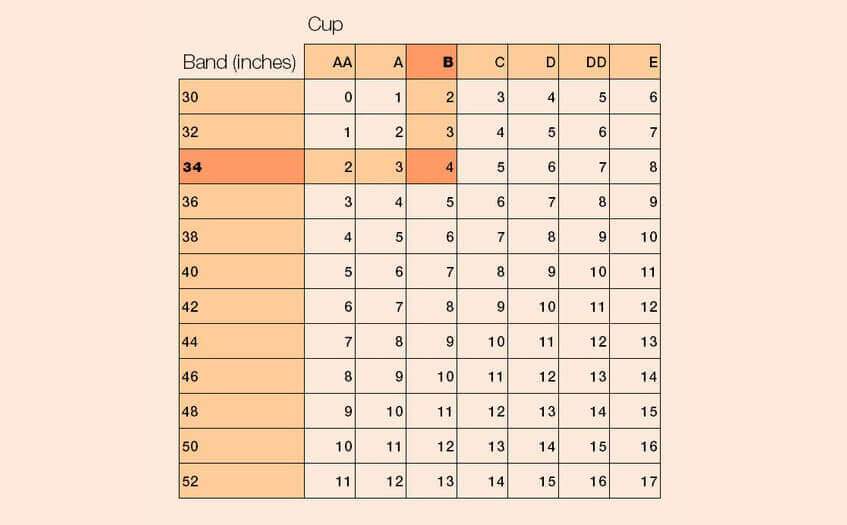
To find the size of breast form required, locate your bra size on the conversion chart.
Example: A 34B will require a size 4 breast form.
Putting it all together
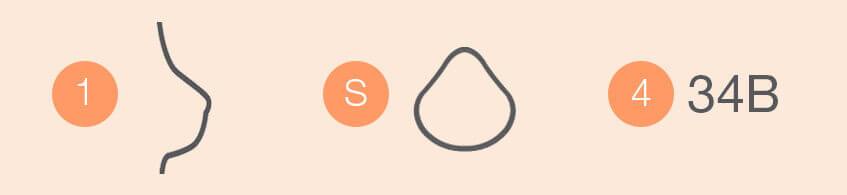
Now you have all the information you need to order the correct breast form. In the example shown, we have chosen a Contact breast form in a shallow cup and symmetrical fitting, bra size 34B which converts to a size 5.
Understanding Breast Form Shape, Fullness & Profile
Your Amoena code (for example, 2S 444) is more than just a size - it’s a quick way to describe how your breast form will look and feel when you’re wearing it. Here’s how to think about the main parts of the code in everyday terms.
Cup Fullness: Shallow, Average or Full
The first number in the code describes how full your natural breast is. This helps your fitter choose a form that follows your natural curve instead of fighting against it:
- Shallow - Your breast has a softer slope at the top and more fullness toward the bottom of the cup. A shallow form helps you avoid extra bulk at the neckline.
- Average - Most women fall into this category. The breast has a balanced shape with gentle fullness through the whole cup.
- Full - Your breast has more volume toward the top and center of the cup. A fuller form helps you match that rounder profile so clothing hangs evenly.
Matching the fullness correctly is one of the biggest factors in getting a natural look under clothing. Too full, and the bra can gap or wrinkle. Too shallow, and the cup can look collapsed or empty.
Shape: Symmetrical, Asymmetrical or Extra
The letter in the code (S, A or E) describes the shape of the form when you look at it from the front:
- S (Symmetrical) – Even on both sides. Often the best choice after a standard mastectomy when the chest wall is smooth and there has not been extra tissue removed under the arm.
- A (Asymmetrical) – Extends slightly under the arm on one side. This can be helpful if you have had lymph nodes removed or if there is a hollow area under your arm that needs gentle filling for a smooth silhouette.
- E (Extra) – Offers a bit more volume or extended coverage in certain areas. This can be useful for women with more complex chest wall changes or when extra balance is needed.
Your fitter will usually look at both your surgery site and your remaining breast to decide whether a symmetrical or asymmetrical shape will give you the smoothest result.
Profile & Drape
Within each code, there are different profiles - how projected the form is and how it drapes on the chest. A higher-profile form sits a little farther forward and can be a good match if your natural breast is round and projected. A softer, lower-profile form can be more comfortable and natural if you prefer a more subtle look or wear looser clothing.
During your fitting we will look at you from the front and the side, in your own clothing, to make sure the fullness, shape and profile all work together for a balanced, comfortable appearance.
Breast Form Materials: Silicone, Foam & Leisure Forms
Not every breast form is meant for every moment of your day. Different materials are designed for different situations, so many women end up with more than one option that they rotate between.
Silicone Breast Forms
Silicone forms are the most common everyday choice. They are designed to mimic the natural weight, softness and movement of breast tissue.
- Best for: Everyday wear, work, social occasions.
- Benefits: Very natural shape and movement under clothing; helps restore balance and posture by matching the weight of the missing breast.
- Good to know: Silicone forms can feel warmer than foam, so many women prefer specialty models with cooling features or lighter-weight designs.
Foam & Fiberfill Forms
Foam forms are very lightweight and soft. They are often used immediately after surgery and for relaxing at home.
- Best for: Early post-surgical wear (once your doctor allows it), sleeping, days at home, or times when you want almost no weight on the chest.
- Benefits: Gentle on sensitive skin, light and breathable, easy to wash.
- Good to know: Because they are so light, they don’t always provide the same balance and drape as a silicone form. Many women keep them as a comfortable “backup” option.
Leisure, Swim & Activity Forms
Leisure forms and activity-focused forms (including swim forms) are designed for specific situations such as swimming, exercise or very casual wear.
- Best for: Swimming, gentle exercise, yoga, travel, or wearing around the house.
- Benefits: Often quicker-drying, lighter and more flexible; some are designed specifically for use in chlorinated pools or salt water.
- Good to know: A swim form usually works best in a pocketed swimsuit so it stays in place, even when the fabric is wet.
During your fitting, we’ll talk about your daily routine so we can recommend the right combination of forms – for example, a silicone form for daily wear and a leisure or swim form for more active days.
When Should I Consider a New Breast Form or Refit?
Even with the right form, your body and lifestyle can change over time. It may be time to consider a refit or a new prosthesis if you notice any of the following:
- Your bra or form has started to shift, slip or turn during the day.
- You see gaping, wrinkles or bulging at the bra cup that was not there before.
- You have new or increased pain in your neck, shoulders or back.
- Your weight has changed significantly, or you have had additional surgery or treatment.
- Your form is more than two years old and no longer feels as supportive or comfortable.
Most funding programs and private insurers expect that you will need a replacement every 24 months, and sometimes sooner if there has been a medical or surgical change. If anything about your current fit doesn’t feel right, we encourage you to book a fitting so we can review your options together.
Ready to find your perfect fit and support?
Book Your Certified Mastectomy Fitting Appointment Now
If you’re still not sure what to order, don’t worry - contact us and we’ll be pleased to assist you.